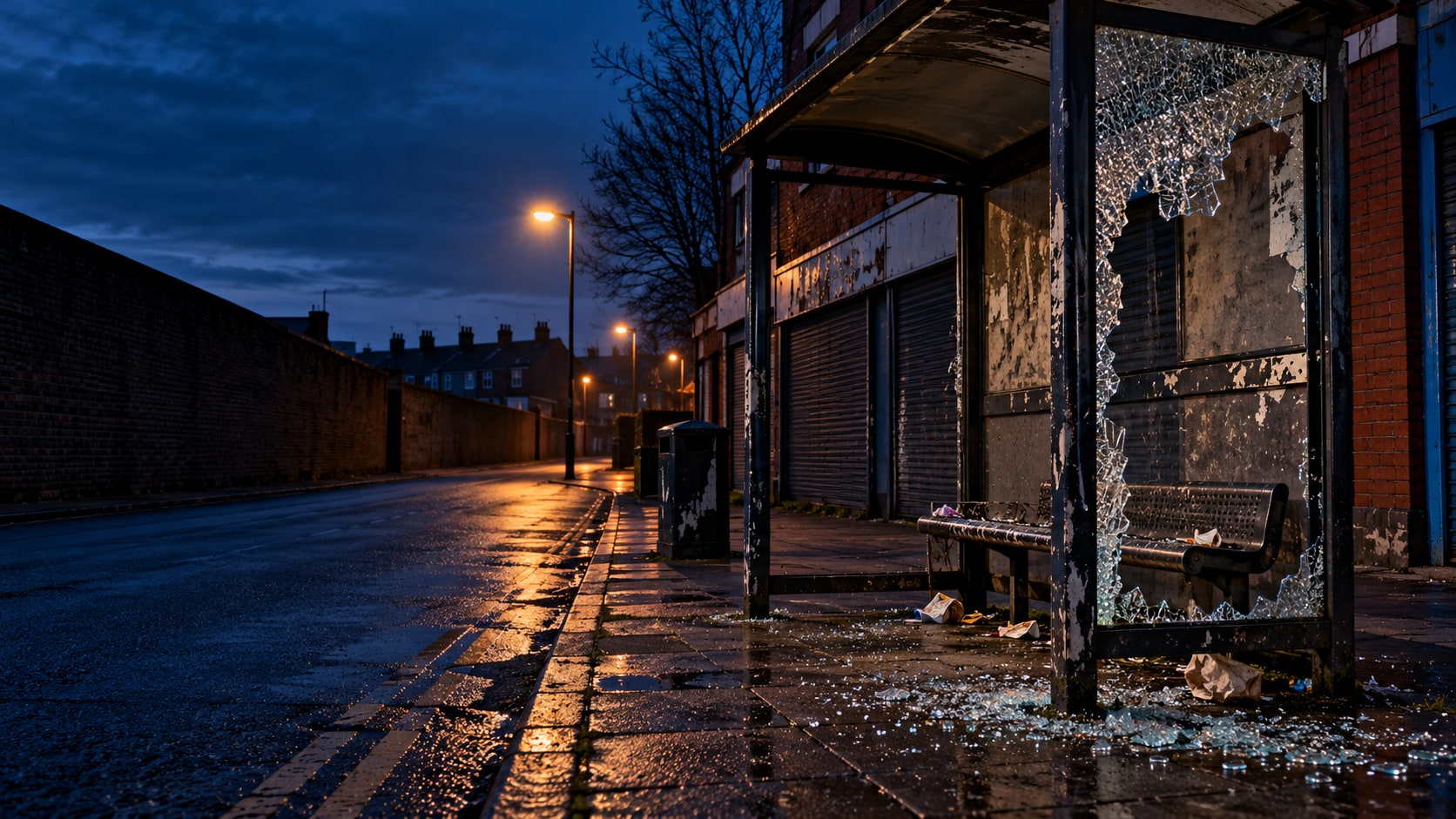
Illustrative damaged bus shelter with broken glass and litter on a neglected street at dusk

NEW FROM SOUND OF CHANGE

Breaking
the Cycle

of Antisocial Behaviour

Your next choice can change the story.

One session helping young people understand the impact of antisocial behaviour, handle pressure and build a lifestyle of positive social behaviour.

High-impact assemblyA shared message for a school audience.
Whole year groupsA relevant conversation at scale.
Classrooms across a dayThe session repeated for different classes.

WATCH THE SOUND OF CHANGE FILM

Breaking the Cycle.
A different choice starts here.

2 minutes 50 seconds
Narrated by Mark Stevens

Explore the impact of antisocial behaviour, the pressure to join in and the everyday choices that help people feel safe, included and respected.

Spoken captions are included in the film. Contains dramatised scenes of bullying and intimidation, intended for Key Stages 3 and 4. Staff should preview it before sharing with younger pupils.

Read the film transcript

It can begin with a moment, someone says go on, a phone starts recording, everyone's watching and you're deciding whether to join in. Sometimes you know something's wrong but walking away can feel harder when your friends are involved.

Antisocial behaviour can mean damaging places, intimidating people or repeatedly making someone feel unsafe. It might get called a laugh, but someone has to live with what happens afterwards. The person who feels frightened walking home,

the family kept awake night after night, the shop worker facing abuse while trying to do their job, the young person whose favourite place gets damaged, then closed. And the consequences can reach the people joining in too. Relationships suffer, trust breaks down,

some actions are crimes and can bring police involvement. A moment can leave you dealing with consequences long after everyone else has gone home. There are reasons people get pulled into it, wanting to belong, feeling angry or shut out,

having nowhere you feel welcome. Sometimes someone uses friendship, threats or pressure to get you involved. Understanding those pressures helps us recognise when someone needs support. It also helps us see where we can make a different choice.

That choice might be leaving before things escalate, saying I'm heading off, come with me, speaking to an adult you trust. If someone threatens you or makes you feel trapped, get help. You don't have to handle it alone.

And if you've already joined in, you can still ask for support and take responsibility for what happens next. Positive social behaviour starts with how we treat people in the places we share.

It's checking on someone who's been targeted, respecting the person behind the counter, finding people who support your interests and give you room to be yourself. Through music, sport, creativity or something you haven't discovered yet,

you can find somewhere to belong and something to work towards. You can help make your school, your street and your community feel safer. Your next choice can change the story, breaking the cycle, sound of change.
Music: “Signal to Noise” by Scott Buckley, used under CC BY 4.0. Edited and mixed for this film. Full film credits.

A STANDALONE SESSION FOR SCHOOLS

Understanding the harm.
Practising a different response.

Antisocial behaviour can make everyday places feel unsafe. Breaking the Cycle explores the impact on individuals, families and communities, then gives young people space to think about the influences and choices that shape their own behaviour.

The session combines Mark Stevens’ lived experience with clear examples, discussion and practical activities. It finishes with PSB: positive social behaviour, and the everyday habits that help others feel safe, included and respected.

A one-session offering, adapted to your timetable. Choose a focused assembly or a more interactive classroom format, with repeat sessions available across a school day.

AGE-APPROPRIATE DELIVERY

Key Stages 2, 3 and 4.

Breaking the Cycle is suitable for Key Stages 3 and 4 and can be adapted for Key Stage 2. We agree the language, examples, story content and activities with your school so the session fits pupils’ age, maturity, learning needs and prior learning.

KS2 · AGES 7–11

Kindness, choices and community

An adapted primary version focuses on friendship, feelings, respect for people and shared spaces, recognising unkind or unsafe behaviour, and asking a trusted adult for help. Simple scenarios help pupils practise saying no and making a positive choice, with content tailored to the year group.

KS3 · AGES 11–14

Pressure, belonging and safer responses

Pupils explore peer influence, boundaries, the impact of antisocial behaviour and ways to manage disagreement. Discussion helps them consider consequences, leave unsafe situations and seek support for themselves or a friend.

KS4 · AGES 14–16

Responsibility and future choices

Older pupils consider more complex situations involving social pressure, harmful influences and the effects of choices on relationships, communities and future opportunities. Activities build responsible decision-making, safe responses and confidence to access support.

For all key stages, delivery is supportive and non-graphic. Pupils are not asked to disclose personal experiences. We discuss SEND adaptations, accessibility and safeguarding arrangements with staff before the visit.

HONEST LIVED EXPERIENCE

A real story.
A reason to think again.

In a focused 10–15 minute section, Mark shares how addiction, harmful influences and crime affected his closest relationships, career and opportunities, and opens a conversation about change.

The story gives young people a human connection to the subject. Discussion and practical learning help them consider the consequences, recognise pressure and identify support.

Content and depth are agreed with school staff and adapted to the age and needs of the audience. For Key Stage 2, the story is simplified and sensitive detail about addiction and crime is omitted or reframed with staff beforehand.

WHAT THE SESSION EXPLORES

Clear questions. Practical responses.

01

What is ASB?

Recognising harmful behaviour and understanding its effects on the person targeted and the wider community.

02

How does a cycle develop?

Exploring peer influence, belonging, stress and substance misuse without assuming everyone follows the same path.

03

What are the warning signs?

Spotting unsafe pressure, harmful expectations and situations where boundaries or adult support are needed.

04

How can I respond?

Rehearsing ways to decline, leave safely and seek help when someone encourages harmful behaviour.

05

What if a friend is involved?

Caring about a friend while protecting yourself, setting boundaries and involving a trusted adult.

06

How do we build PSB?

Turning empathy, respect and responsibility into positive actions young people can practise every day.

THE POSITIVE TURN

Positive social behaviour.
Choice by choice.

Young people finish by considering the influence they can have: including someone, respecting a boundary, handling disagreement or asking for help before a situation escalates.

In classroom delivery, a Sound of Change creative activity invites them to put that message into their own words through a short verse or spoken reflection.

Plan a session for your school

SHAPED AROUND YOUR SETTING

One clear message.
The format that fits.

Suitable for Key Stages 3 and 4, with an age-appropriate version available for Key Stage 2. Year groups, group sizes, session length and learning needs are agreed before delivery.

Schools can book an assembly, a whole-year-group session or repeat classroom sessions across a day. We will provide a tailored delivery plan and quote.

Prepared with your school

We agree supervision, safeguarding and support routes with your staff. Young people can take part without disclosing personal experiences.

A useful next step

Age-appropriate signposting and a positive action to take away help staff continue the conversation after the session.

An educational session supporting your PSHE and pastoral work. Specialist needs are referred to appropriate services.

NOW AVAILABLE FOR SCHOOL ENQUIRIES

Bring Breaking the Cycle
to your young people.

Tell us your year group, audience size and preferred format. We will help you plan the right session.

Start your enquiry

Promotional image: AI-generated illustrative scene.